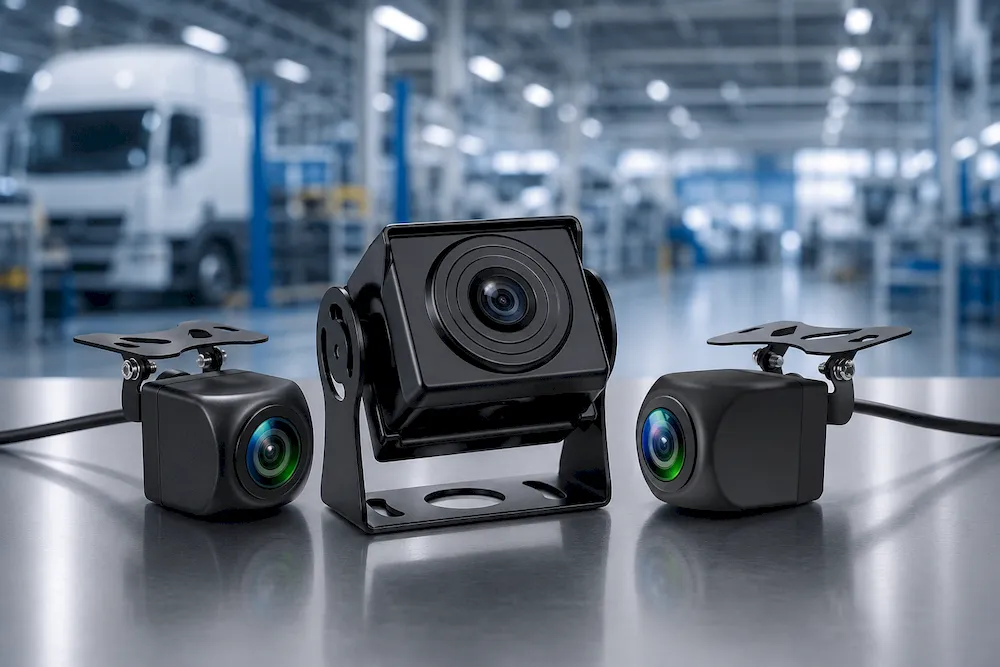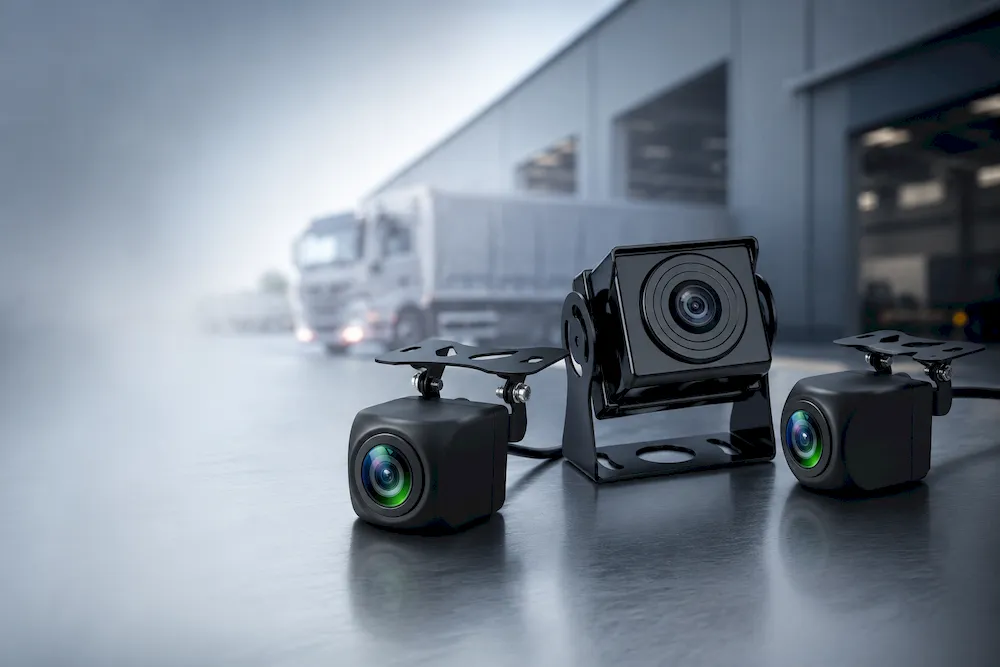
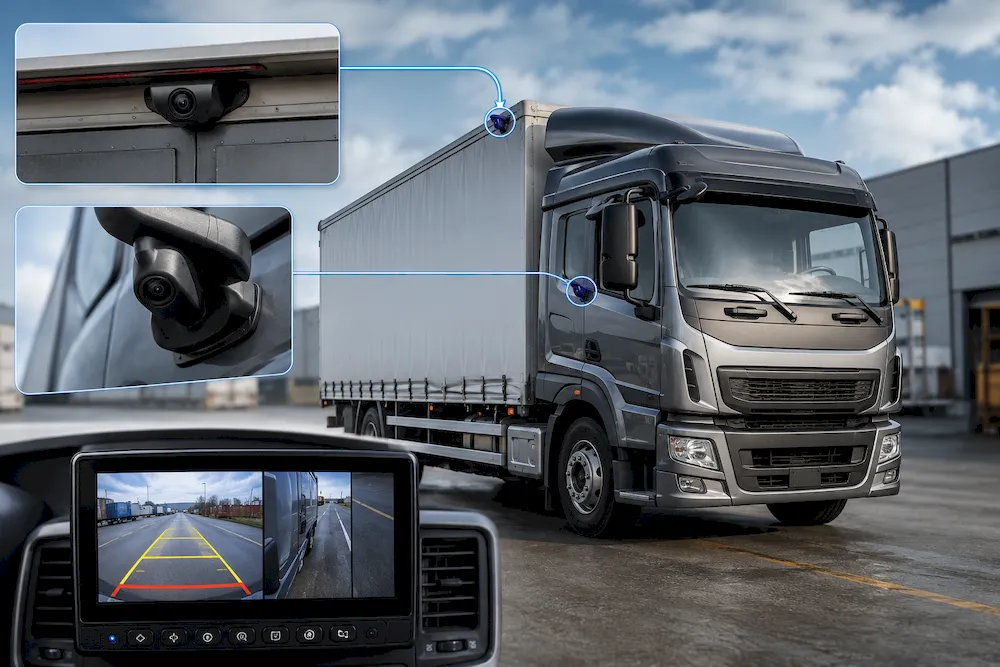
Choosing the right vehicle camera is very important for trucks, buses, vans, construction vehicles, and other commercial vehicles. A good camera system can help drivers see blind spots, reverse safely, reduce accidents, and protect both people and cargo.
For fleet owners, distributors, and OEM buyers, vehicle cameras are not only simple accessories. They are part of a complete safety system. The right camera can improve driving safety, reduce insurance risks, and make vehicle operation easier.
In this guide, we will explain how to choose the right vehicle camera for trucks and commercial vehicles in a simple way.
Why Vehicle Cameras Are Important for Commercial Vehicles
Commercial vehicles are usually larger than normal cars. Trucks and buses have more blind spots, longer bodies, and more difficult driving conditions. Drivers may not clearly see what is behind, beside, or in front of the vehicle.
A vehicle camera helps solve this problem.
Main Benefits of Vehicle Cameras
Vehicle cameras can help with:
- Safer reversing
- Better blind spot detection
- Easier parking
- Reduced accident risk
- Better driver awareness
- Safer lane changing
- Better fleet management
- Protection from false accident claims
For trucks and commercial vehicles, even a small accident can cause high repair costs, delivery delays, and safety problems. This is why many companies now install camera systems as standard equipment.
Understand Your Vehicle Type First
Before choosing a vehicle camera, the first step is to understand the vehicle type. Different vehicles need different camera solutions.
Trucks
Trucks usually need rear view cameras, side cameras, blind spot cameras, and sometimes 360° camera systems. For long trucks, the camera should have a wide viewing angle and stable signal transmission.
Buses
Buses often need front view cameras, side view cameras, rear cameras, and passenger area monitoring. Safety around the vehicle is very important because buses often operate in busy roads and crowded areas.
Vans and Delivery Vehicles
Delivery vehicles need cameras for reversing, parking, and blind spot checking. A compact camera with clear image quality is often enough for small and medium vans.
Construction and Special Vehicles
Construction vehicles often work in harsh environments. They need strong cameras with waterproof, dustproof, shock-resistant, and night vision features.
Choose the Right Camera Type
There are many types of vehicle cameras. Each type has a different use. Choosing the right type depends on the vehicle and the safety problem you want to solve.
Reverse Camera
A reverse camera is installed at the rear of the vehicle. It helps the driver see what is behind the vehicle when reversing.
This is one of the most common vehicle cameras for trucks, vans, buses, and commercial vehicles.
A good reverse camera should have:
- Clear image quality
- Wide viewing angle
- Waterproof housing
- Good night vision
- Stable connection with the display screen
BSD 盲点摄像头
BSD means Blind Spot Detection. A BSD blind spot camera helps the driver see areas that mirrors cannot cover.
This type of camera is useful for trucks, buses, and large commercial vehicles. It can reduce risks during lane changes and turns.
BSD cameras are often installed on the side of the vehicle.
ADAS Front View Camera
ADAS means Advanced Driver Assistance System. An ADAS front view camera is used to support smart driving safety functions.
It can help with road monitoring, front view recording, and safety warning systems. This type of camera is suitable for modern commercial vehicles and fleet safety projects.
360° 全景环绕摄像头
A 360° panoramic camera system uses several cameras around the vehicle to create a full view around the vehicle.
This system is very useful for large trucks, buses, RVs, construction vehicles, and special vehicles.
It helps drivers see the full area around the vehicle, making parking, turning, and driving in narrow spaces much safer.
DSM 疲劳监测摄像机
DSM means Driver Status Monitoring. A DSM camera is used to monitor the driver’s condition.
It can help detect signs of fatigue, distraction, or unsafe driving behavior. This is useful for long-distance trucks and fleet vehicles.
Driver fatigue is one of the main causes of road accidents. A DSM system can help fleet companies improve driver safety management.
Check the Image Quality
Image quality is one of the most important points when choosing a vehicle camera.
If the image is unclear, the camera cannot provide real safety value. The driver must be able to see people, vehicles, road lines, obstacles, and objects clearly.
Resolution
For most commercial vehicle cameras, HD image quality is recommended. A higher resolution can provide a clearer picture, especially when the vehicle is moving or working in a busy area.
Common options include:
- 720P
- 1080P
- AHD camera systems
For B2B buyers, 1080P AHD cameras are often a good choice because they provide clear image quality and stable performance.
Night Vision
Many commercial vehicles work at night or in low-light environments. So night vision is very important.
A good camera should still show a clear image at night, in parking areas, loading areas, tunnels, and dark roads.
Wide Viewing Angle
A wider viewing angle helps the driver see more area. For rear view and side view cameras, wide angle is very useful.
However, the angle should not be too wide if it makes the image look too distorted. The best choice is a balance between wide view and clear image.
Check Waterproof and Durability Ratings
Commercial vehicles often work in tough conditions. Cameras may face rain, dust, mud, vibration, heat, and cold weather.
So the camera must be strong enough for long-term use.
Waterproof Design
For outdoor vehicle cameras, waterproof design is necessary. Many vehicle cameras use an IP rating to show waterproof and dustproof performance.
For trucks and commercial vehicles, IP67 or IP68 is commonly recommended.
Shock Resistance
Trucks and special vehicles often drive on rough roads. The camera should be able to handle vibration and shock.
A weak camera may become loose, stop working, or show unstable images after long use.
Strong Housing Material
The camera housing should be strong and durable. Metal housing is often better for commercial vehicle use because it can protect the camera better than low-quality plastic housing.
Match the Camera with the Display Screen
A vehicle camera usually works with a display screen or monitor. When choosing a camera, you also need to check if it matches the display screen.
Screen Size
Common vehicle display screens include 7-inch, 9-inch, and 10-inch monitors.
For trucks and buses, a larger screen can help drivers see more clearly. But the screen should not block the driver’s view.
Single Camera or Multi-Channel System
Some vehicles only need one rear camera. Some trucks need a 4-channel system, including front, rear, left, and right cameras.
For fleet projects, a 4-channel all-in-one monitoring system can be a better choice.
It can connect multiple cameras and show different views on one screen.
Choose Wired or Wireless Camera System
Vehicle cameras can be wired or wireless. Both options have their advantages.
Wired Camera System
A wired system usually has a more stable signal. It is suitable for trucks, buses, and long-term commercial use.
Advantages:
- Stable video signal
- Lower interference
- Better for long-term use
- Suitable for large vehicles
The main disadvantage is that installation may take more time.
Wireless Camera System
A wireless system is easier to install because it needs fewer cables. It is useful for some trucks, trailers, and vehicles where wiring is difficult.
Advantages:
- Easier installation
- Less cable work
- Good for some special vehicle applications
However, the signal may be affected by distance, interference, or environment. For important commercial safety use, buyers should choose high-quality wireless systems.
Think About Installation Position
Camera position affects the final viewing result. Even a good camera may not work well if it is installed in the wrong place.
Common Installation Positions
Vehicle cameras can be installed in different positions:
- Rear of the vehicle
- Front of the vehicle
- Left side
- Right side
- Inside the cabin
- Near the windshield
- Around the vehicle body for 360° view
Before bulk purchasing, it is better to test the installation position on the real vehicle.
Choose a Reliable Manufacturer
For distributors, importers, fleet companies, and OEM buyers, choosing a reliable manufacturer is just as important as choosing the right product.
A professional vehicle camera manufacturer can provide better product quality, stable supply, and technical support.
What to Check Before Choosing a Supplier
You should check:
- Product range
- OEM and ODM ability
- Quality control process
- Camera testing standards
- Waterproof and vibration testing
- Experience with commercial vehicle projects
- Custom cable and connector options
- After-sales support
- Packaging and branding options
For B2B buyers, stable quality is very important. A low-cost camera may look good at first, but if it fails after installation, the total cost will be much higher.
Do Not Only Focus on Price
Price is important, but it should not be the only factor. For commercial vehicle safety products, quality and reliability are more important.
A cheaper camera may have poor night vision, weak waterproof design, short service life, or unstable image quality.
When comparing prices, you should also compare:
- Image quality
- Materials
- Waterproof rating
- Warranty
- Cable quality
- Connector quality
- Testing process
- Supplier experience
A good vehicle camera should bring long-term value, not only a low purchase cost.
Final Thoughts
Choosing the right vehicle camera for trucks and commercial vehicles is not difficult if you understand your needs clearly.
First, check the vehicle type and driving environment. Then choose the right camera type, such as reverse camera, BSD blind spot camera, ADAS front view camera, DSM camera, or 360° surround camera system.
You should also pay attention to image quality, night vision, waterproof rating, shock resistance, display screen compatibility, installation position, and supplier reliability.
For B2B buyers, a good vehicle camera system can improve safety, reduce accidents, and create better value for customers. Working with a reliable vehicle camera manufacturer can also help you get stable quality, OEM support, and long-term business growth.