
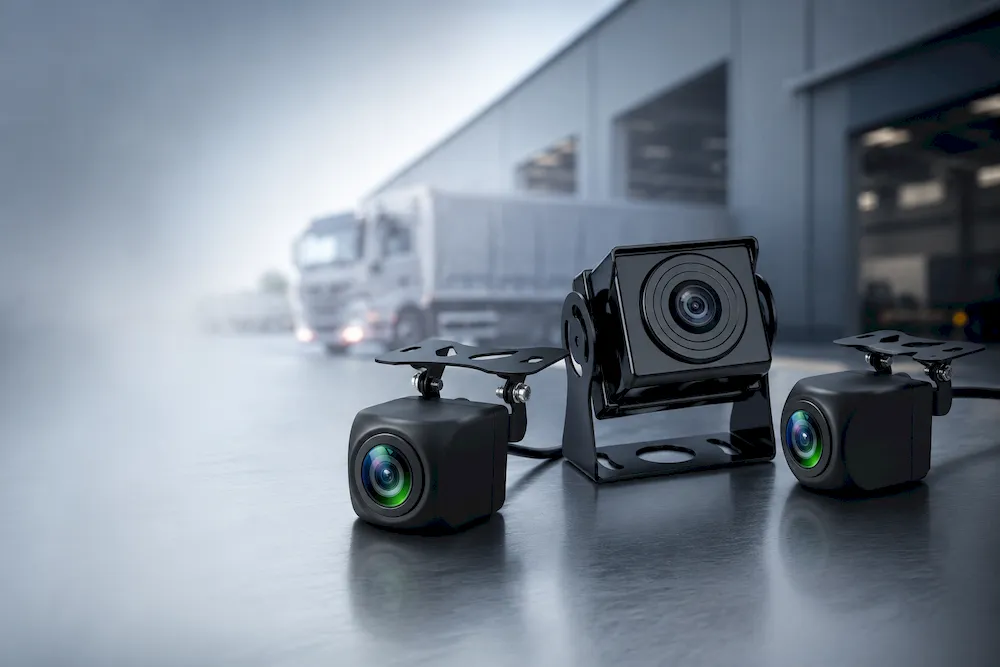
Les caméras pour véhicules sont de plus en plus importantes sur le marché des véhicules utilitaires. Les camions, les bus, les camionnettes, les remorques, les véhicules de construction et les véhicules spéciaux ont tous besoin d'une meilleure visibilité et d'une conduite plus sûre. Pour les distributeurs et les acheteurs OEM, le choix de la bonne caméra embarquée ne se limite pas à l'achat d'un produit. Il s'agit de choisir une solution fiable qui pourra servir vos clients pendant longtemps.
Une bonne caméra embarquée doit être claire, durable, facile à installer et adaptée à différents types de véhicules. Elle doit également provenir d'un fabricant fiable qui comprend les projets OEM, les commandes en gros et la coopération à long terme.
Ce guide d'achat aidera les distributeurs et les acheteurs OEM à comprendre ce qu'il faut vérifier avant d'acheter des caméras pour véhicules.
Pourquoi les caméras embarquées sont-elles un bon produit pour les acheteurs B2B ?
La demande de caméras pour véhicules augmente car de plus en plus d'entreprises se préoccupent de la sécurité routière, de la gestion des flottes et de l'aide à la conduite. De nombreux véhicules commerciaux ont des angles morts, en particulier les gros camions et les autobus. Un système de caméra aide les conducteurs à voir les zones que les rétroviseurs ne peuvent pas couvrir.
Pour les distributeurs, les caméras embarquées peuvent constituer une ligne de produits solide car elles sont utilisées sur de nombreux marchés. Pour les acheteurs OEM, elles peuvent être intégrées dans de nouveaux véhicules ou dans des systèmes de sécurité personnalisés.
Principales applications du marché
Les caméras embarquées peuvent être utilisées pour :
- Camions et remorques
- Autobus et autocars
- Fourgons de livraison
- Véhicules de chantier
- Véhicules agricoles
- Chariots élévateurs et véhicules d'entrepôt
- Véhicules de loisirs et véhicules spéciaux
- Systèmes de sécurité de la flotte
En raison du large éventail d'applications, les acheteurs peuvent choisir différents types de caméras pour répondre aux différents besoins des clients.
Comprendre les principaux types de caméras pour véhicules
Avant de passer commande, les acheteurs doivent comprendre les principaux types de caméras pour véhicules. Les différentes caméras ont des fonctions différentes.
Caméra de recul
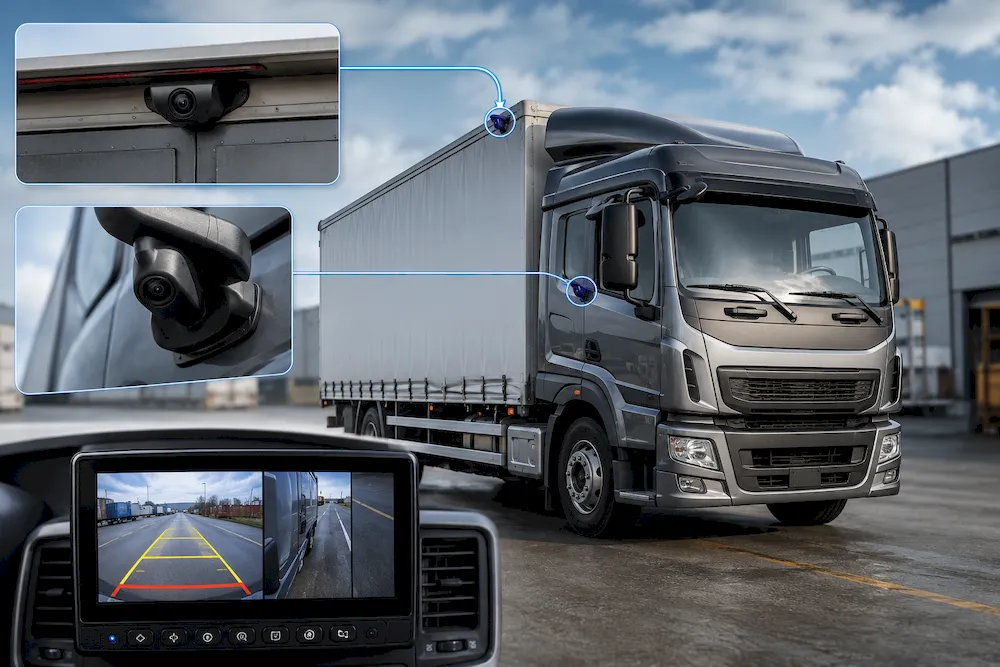
Une caméra de recul est installée à l'arrière du véhicule. Elle aide le conducteur à voir derrière le véhicule lorsqu'il fait marche arrière ou se gare.
Pour les camions et les autobus, une caméra de recul est très utile car la carrosserie du véhicule est longue et l'angle mort arrière est important.
Lors du choix d'une caméra de recul, il convient de vérifier ce qui suit :
- Clarté de l'image
- Performance en matière de vision nocturne
- Indice d'étanchéité
- Angle de vue
- Longueur du câble
- Type de connecteur
- Résistance du support
Caméra de vision latérale
Une caméra latérale est généralement installée sur le côté gauche ou droit du véhicule. Elle permet de réduire les angles morts lors des changements de voie et des virages.
Cette caméra est particulièrement utile pour les camions, les bus et les grands véhicules commerciaux.
Caméra d'angle mort BSD
BSD signifie détection de l'angle mort. Une caméra d'angle mort BSD aide les conducteurs à détecter les véhicules, les personnes ou les objets dans les zones aveugles.
Pour les projets de sécurité des flottes, les caméras BSD sont de plus en plus populaires car elles contribuent à réduire les risques de collision latérale.
Caméra frontale ADAS
ADAS signifie Advanced Driver Assistance System (système avancé d'aide à la conduite). Une caméra frontale ADAS peut prendre en charge des fonctions de sécurité intelligentes telles que la surveillance de la vue avant et l'assistance à la conduite.
Ce type de caméra convient aux projets de véhicules haut de gamme et aux systèmes de véhicules intelligents.
Système de caméra panoramique 360
Un système de caméra à 360° utilise plusieurs caméras autour du véhicule pour créer une vue complète autour du véhicule.
Il est utile pour les gros camions, les autobus, les véhicules de loisirs et les véhicules qui travaillent souvent dans des zones étroites ou encombrées.
Caméra de surveillance de la fatigue DSM
DSM signifie Driver Status Monitoring (surveillance de l'état du conducteur). Une caméra DSM surveille le visage et le comportement du conducteur. Elle permet de détecter la fatigue, la distraction ou les habitudes de conduite dangereuses.
Pour les camions et les véhicules de flotte parcourant de longues distances, les systèmes DSM peuvent améliorer la gestion de la sécurité du conducteur.
Vérifier la qualité de l'image avant d'acheter
La qualité de l'image est l'un des facteurs les plus importants pour les caméras embarquées. Si l'image n'est pas claire, la caméra ne peut pas apporter une réelle valeur ajoutée en matière de sécurité.
Résolution
Pour la plupart des caméras de véhicules commerciaux, la qualité d'image HD est recommandée. De nombreux acheteurs optent pour des systèmes de caméras 720P ou 1080P.
Les caméras 1080P sont souvent mieux adaptées à un usage commercial car elles fournissent des images plus claires. Cela est utile lorsque les conducteurs ont besoin de voir les lignes de la route, les personnes, les véhicules ou les petits obstacles.
Vision nocturne
De nombreux véhicules commerciaux travaillent la nuit, tôt le matin ou dans des zones de chargement sombres. La vision nocturne est donc très importante.
Une bonne caméra embarquée doit fournir une image claire en cas de faible luminosité. Elle doit aider le conducteur à voir clairement même dans les parkings, les entrepôts, les tunnels et les routes de nuit.
Angle de vue
L'angle de vision détermine la zone que la caméra peut couvrir. Un grand angle de vue permet de réduire les angles morts.
Toutefois, l'image ne doit pas être trop déformée. Pour les acheteurs B2B, il est préférable de tester différents angles de vue et de choisir celui qui correspond à l'application du véhicule.
Vérifier la durabilité et le niveau de protection
Les caméras embarquées sont souvent installées à l'extérieur du véhicule. Elles doivent fonctionner sous la pluie, la poussière, la boue, les vibrations, la chaleur et le froid.
Pour les distributeurs et les acheteurs OEM, la durabilité est très importante car la défaillance d'un produit peut entraîner des réclamations de la part des clients, des coûts de garantie et une atteinte à la réputation de votre marque.
Résistance à l'eau et à la poussière
Les caméras extérieures pour véhicules doivent être conçues pour résister à l'eau et à la poussière. Les indices IP67 ou IP68 sont couramment utilisés pour les caméras de véhicules commerciaux.
Cela signifie que la caméra peut fonctionner dans des environnements humides et poussiéreux.
Résistance aux vibrations
Les camions et les véhicules spéciaux roulent souvent sur des routes accidentées. L'appareil photo doit supporter les vibrations et les chocs lors d'une utilisation prolongée.
Un appareil photo faible peut se détacher, produire des images instables ou cesser de fonctionner au bout d'un certain temps.
Matériau du boîtier
Le boîtier de la caméra doit être solide. Les caissons métalliques sont souvent mieux adaptés aux véhicules utilitaires car ils offrent une meilleure protection et une durée de vie plus longue.
Les boîtiers en plastique peuvent être utilisés pour certaines applications légères, mais pour les camions et les autobus, des matériaux plus résistants sont généralement recommandés.
Adapter la caméra au moniteur ou au système
Une caméra embarquée fonctionne généralement avec un moniteur, un enregistreur numérique ou un système de surveillance tout-en-un. Avant d'acheter, vous devez vous assurer que la caméra est compatible avec le système.
Taille du moniteur
Les écrans d'affichage les plus courants dans les véhicules sont les écrans de 7, 9 et 10 pouces.
Pour les camions et les bus, un écran plus grand peut aider les conducteurs à voir plus clairement. Mais l'écran ne doit pas bloquer la vue du conducteur.
Caméra unique ou système multicanal
Certains véhicules n'ont besoin que d'une seule caméra. D'autres véhicules ont besoin de plusieurs caméras.
Par exemple :
- Petite camionnette : une caméra de recul
- Camion : caméra arrière + caméra latérale
- Bus : caméra frontale + caméra arrière + caméras latérales
- Véhicule de grande flotte : Système de caméras à 4 canaux ou 360
Pour les projets concernant les véhicules commerciaux, un système de surveillance à 4 canaux est souvent un choix pratique. Il permet de connecter plusieurs caméras et d'afficher différentes vues sur un seul écran.
Choisir des solutions câblées ou sans fil
Les systèmes de caméras pour véhicules peuvent être filaires ou sans fil. Les deux types ont leurs propres avantages.
Système de caméra câblé
Un système de caméra filaire fournit généralement un signal plus stable. Il convient aux camions, aux autobus et à une utilisation commerciale à long terme.
Les avantages sont les suivants
- Transmission vidéo stable
- Moins d'interférences de signaux
- Meilleur pour l'utilisation sur de longues distances
- Bon pour l'installation OEM
- Convient aux projets de flotte
Le principal inconvénient est que l'installation prend plus de temps car les câbles doivent être disposés correctement.
Système de caméra sans fil
Un système de caméras sans fil est plus facile à installer car il réduit les travaux de câblage.
Il convient à certaines remorques, camions et véhicules où le câblage est difficile.
Les avantages sont les suivants
- Une installation plus facile
- Moins de travaux de câblage
- Utilisation flexible
- Bon pour les projets de rénovation
Toutefois, les systèmes sans fil peuvent être affectés par la distance, les interférences de signal et l'environnement. Pour les applications de sécurité importantes, les acheteurs doivent choisir des produits sans fil de haute qualité et les tester avant de les commander en masse.
Les acheteurs OEM doivent vérifier leur capacité de personnalisation
Les acheteurs OEM ont généralement besoin de plus que des produits standard. Ils peuvent avoir besoin d'un boîtier, d'une longueur de câble, d'un type de connecteur, d'un logo, d'un emballage ou d'une assistance logicielle personnalisés.
Un fabricant professionnel doit être en mesure de répondre aux différents besoins des OEM.
Options de personnalisation OEM courantes
Les acheteurs OEM peuvent avoir besoin :
- Logo personnalisé
- Couleur personnalisée du produit
- Longueur de câble personnalisée
- Connecteur personnalisé
- Support de montage personnalisé
- Emballage sur mesure
- Manuel d'utilisation personnalisé
- Conception d'étiquettes de produits
- Soutien à l'intégration des systèmes
Shenzhen Surbaner Intelligent Co. Ltd peut proposer différentes solutions de caméras pour véhicules aux distributeurs et aux acheteurs OEM, en aidant les clients à choisir les produits appropriés sur la base d'applications réelles sur les véhicules.
Vérifier l'expérience et le soutien du fournisseur
Le choix du bon fournisseur est très important. Un prix bas ne suffit pas. Vous avez besoin d'un fournisseur capable d'offrir une qualité stable, une communication claire et une assistance technique.
Ce qu'il faut vérifier chez un fournisseur de caméras pour véhicules
Avant de choisir un fournisseur, il convient de vérifier
- Gamme de produits
- Expérience en matière de fabrication
- Processus de contrôle de la qualité
- Normes d'essai
- Capacité OEM et ODM
- Expérience à l'exportation
- Délai de livraison
- Assistance après-vente
- Documents techniques
- Exemple de soutien
Pour les acheteurs B2B, la stabilité de l'approvisionnement est très importante. Si votre fournisseur n'est pas en mesure de vous livrer à temps ou si la qualité varie d'un lot à l'autre, votre activité s'en ressentira.
Demandez des échantillons avant de passer une commande en gros
Avant de passer une commande importante, il est toujours préférable de tester des échantillons. L'essai des échantillons peut vous aider à vérifier la qualité réelle du produit et à éviter les problèmes futurs.
Que tester avec les échantillons ?
Vous devriez tester :
- Clarté de l'image pendant la journée
- Clarté de l'image la nuit
- Performance en matière d'étanchéité
- Position d'installation
- Qualité des câbles et des connecteurs
- Compatibilité des moniteurs
- Angle de vue
- Aspect du produit
- Résistance du support
- Stabilité du signal
Si possible, installez l'échantillon sur un véhicule réel. L'essai sur un véhicule réel est le meilleur moyen de savoir si la caméra est adaptée.
Ne vous contentez pas de comparer les prix
Le prix est important, mais il ne doit pas être le seul facteur de décision. Un appareil photo moins cher peut permettre d'économiser de l'argent dans un premier temps, mais il risque de poser plus de problèmes par la suite.
Les appareils photo de mauvaise qualité peuvent avoir :
- Images floues
- Faible vision nocturne
- Mauvaise conception de l'étanchéité
- Durée de vie courte
- Signal instable
- Brackets faibles
- Taux d'échec élevé
Pour les distributeurs et les acheteurs OEM, la qualité des produits influe sur votre réputation. Un produit fiable peut vous aider à fidéliser vos clients et à développer une activité à long terme.
Réflexions finales
Le choix de la bonne caméra embarquée nécessite une vérification minutieuse. Vous devez comprendre le type de véhicule, la fonction de la caméra, la qualité de l'image, le niveau d'étanchéité, la compatibilité du système, la méthode d'installation et la capacité du fournisseur.
Pour les distributeurs, les bons produits de caméras pour véhicules peuvent vous aider à servir de nombreux groupes de clients, des flottes de camions aux entreprises de bus et aux utilisateurs de véhicules spéciaux. Pour les acheteurs OEM, une solution de caméra fiable peut améliorer la sécurité des véhicules et ajouter de la valeur à votre produit final.
Surbaner se concentre sur des solutions pratiques de caméras pour véhicules commerciaux, y compris des caméras arrière, des caméras latérales, des caméras BSD pour les angles morts, des caméras frontales ADAS, des systèmes de caméras à 360°, des caméras DSM, des moniteurs et des systèmes de surveillance tout-en-un.
En travaillant avec un fabricant fiable de caméras pour véhicules, vous pouvez réduire les risques liés à la qualité, améliorer la satisfaction des clients et créer une gamme de produits plus solide pour votre marché.
 English
  Chinese
  Spanish
  French